


Automated layout for high-frequency heating of the bolt end during forging process
发布时间:
2025-05-30

During the production process of standard components such as T-type bolts, square bolts, hexagonal bolts, and rivets, the ends of the raw round steel need to be heated and forged into shape. With the continuous development and improvement of industrial automation, automatic and intelligent high-frequency heating equipment for forging the ends of round steel is inevitable. Such equipment not only improves production efficiency but also reduces labor costs. One person can manage multiple induction heating devices, making it convenient, stress-free and effortless.
The ends of metal bar materials such as round steel, copper rods, stainless steel rods, and aluminum rods are heated using high-frequency heating automation equipment. This equipment features automatic feeding, automatic sorting, automatic feeding, and automatic discharging, among other automated operation functions. Additionally, the high-frequency furnace has many advantages such as fast heating speed, less oxidation, temperature closed-loop control, better production conditions, and stable and reliable operation. It has been widely applied in the mass production of automotive forgings and standard parts, such as standard parts, bolts, U-bolts, steel rods, and round steel.
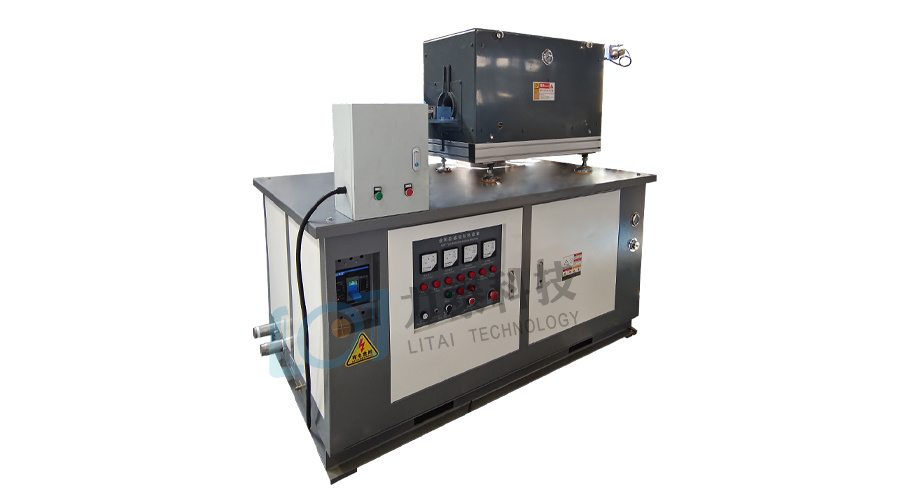
The main advantages of the automatic equipment for high-frequency heating of the end of round steel:
1.The production process is simple, with flexible input and output, and has a high degree of automation. It can achieve online production.
2. The workpiece is heated quickly, with less oxidation and decarburization, resulting in high efficiency and excellent forging quality.
3. The heating length, speed and temperature of the workpiece can be precisely controlled.
4. The workpiece is heated uniformly, with a small temperature difference between the core and the surface, and the control accuracy is high.
5. The sensors can be custom-made according to customer requirements.
6. Energy-saving optimized design, with low energy consumption and high efficiency, and the production cost is lower than that of coal-fired production.
7. It meets environmental protection requirements, causes little pollution, and also reduces the labor intensity of workers.
Related News
If you encounter any questions or are interested in our company's products while browsing our website, please contact us in a timely manner. We will treat every visit, phone call, email, and message with sincerity. We sincerely look forward to your visit!
Contact Us
ADD:No. 87 Huyue Road, Liuhe Economic Development Zone, Nanjing
COPYRIGHT © 2023 Nanjing Litai Intelligent Technology Co., Ltd | SEO | Powered by www.300.cn |


